Peking Opera masks
2026-07-24
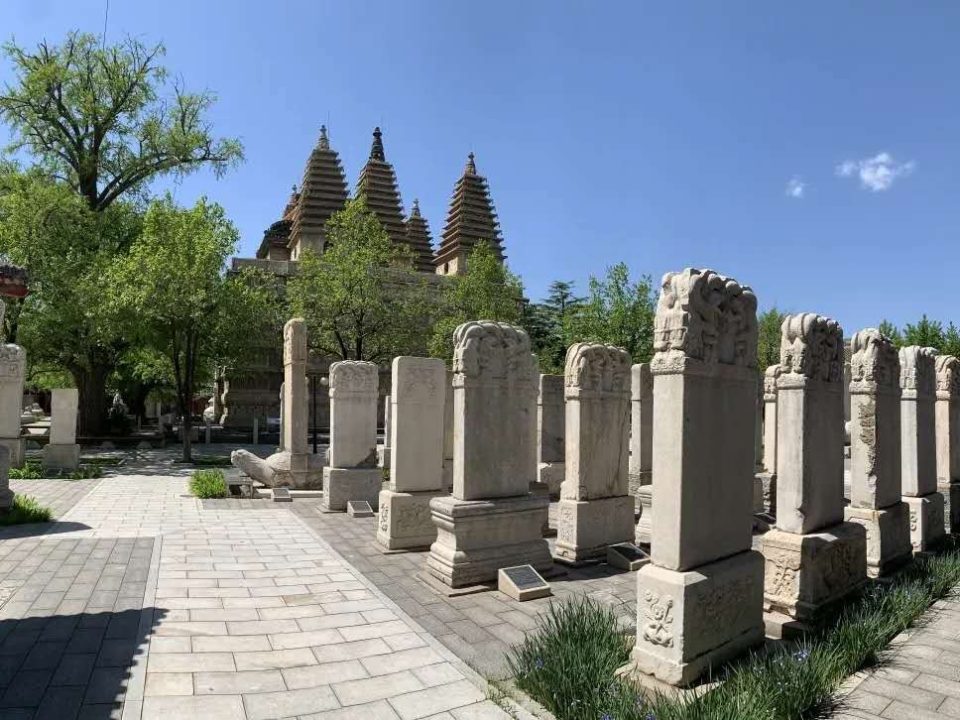
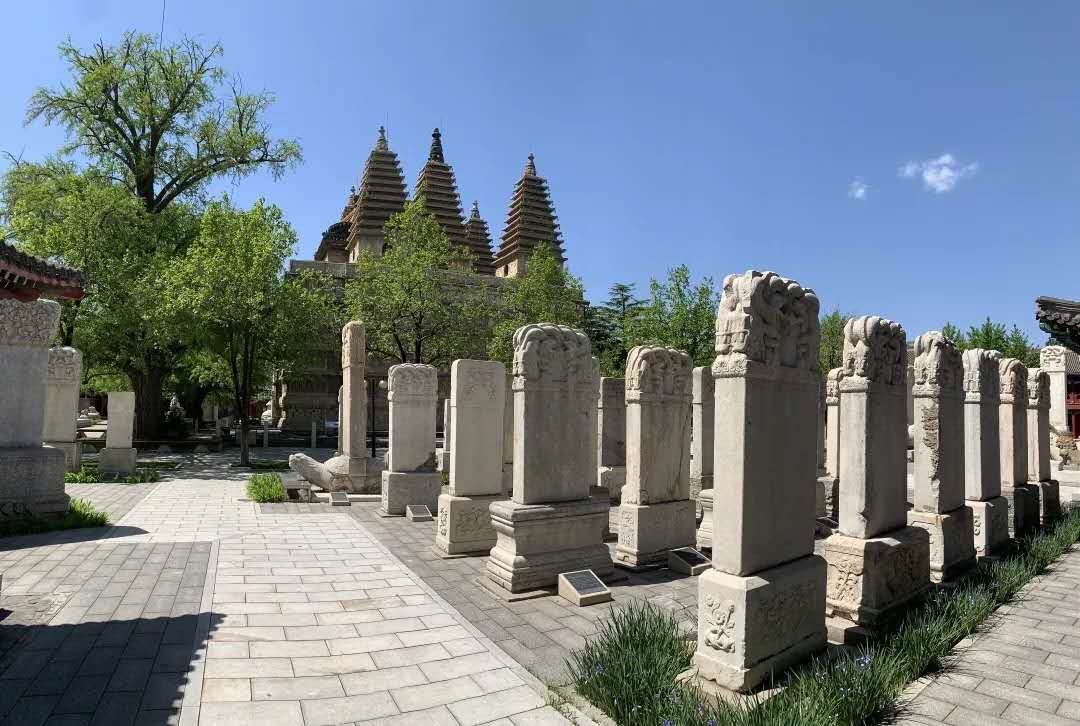
Stone Remembers: An In-Depth Cultural Tour of the Beijing Stone Carving Art Museum
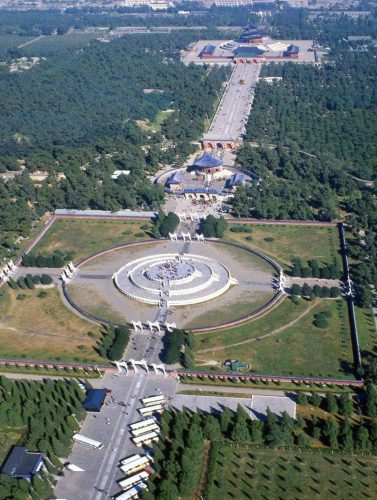
2026-11-12Introduction: The Temple of Heaven Is Not a “Temple”
Many foreign visitors come to the Temple of Heaven assuming it is an ordinary “Chinese temple.” But if you expect to see statues of gods, monks, or the incense of common people offering prayers, you will be puzzled.
In fact, the Temple of Heaven is not a temple at all — it is the “Political Sanctuary” of the Chinese Empire. In the West, a king’s legitimacy often came from coronation by the Pope (as at Westminster Abbey); in ancient China, however, the Emperor was called the “Son of Heaven,” and his authority came directly from “Heaven” itself. The Temple of Heaven was where this “Son of Heaven” came each year to report to the supreme cosmic order and reaffirm the legitimacy of his rule.
Here, we will guide you to unlock the political code hidden behind this architecture — through the lens of “Ritual” (Li).
──────────────────────────────────────────────────
Before we begin this journey, please consider a few questions:
- The Emperor was the supreme ruler of all under Heaven. Why, then, was he required to spend three days alone in the Palace of Abstinence, fasting and self-reflecting before the sacrifice to Heaven? How does this compare with the “Vigil Prayer” of European kings before their coronation?
- The Temple of Heaven contains not a single statue of a deity — yet it is regarded as the most sacred place in China. How did the “formless Heaven” achieve its supreme status?
- How can a 360-meter-long avenue produce in those who walk it the experience of “passing from the mortal to the sacred”? How does “Ritual” accomplish spiritual transformation through spatial choreography?
- Why did Chinese civilization choose to “govern shamanism with reason,” entrusting the experience of communicating with Heaven to precise architectural acoustics rather than to an ecstatic priestly class?
- Where does the Emperor’s power come from? Why is it said that “Heaven may grant the Mandate — and may also revoke it”? How did the monopoly on the sacrifice to Heaven become the ultimate engine of imperial legitimacy?
By the end of this tour, you will have your answers.
──────────────────────────────────────────────────
3-Hour In-Depth Route: A Cross-Temporal Dialogue Between Chinese and Western Civilizations
Stop 1: The Palace of Abstinence — “Self-Purification” Before the Emperor’s Dialogue with Heaven
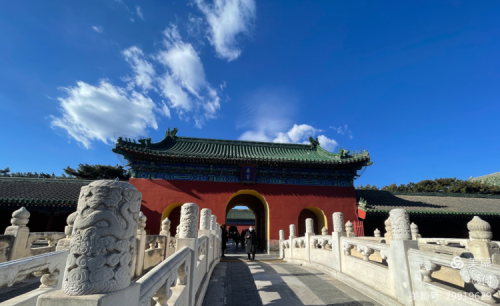
Before the formal sacrifice to Heaven, the Emperor was required to spend three days in seclusion at the Palace of Abstinence, abstaining from meat, alcohol, entertainment, and contact with women. This was no simple “fast” — it was an elaborate “program of physical and spiritual purification.” By stripping away all worldly desires, the Emperor was reduced from a mere “man” back to the “Son of Heaven” — a pure sacrificial subject qualified to commune with Heaven. The very existence of the Palace of Abstinence proclaimed a profound political philosophy: even the supreme ruler of all under Heaven must remain humble and reverent before “Heaven.”
Similar preparatory spaces also appeared in medieval Europe. A king keeping a solitary vigil in a cathedral on the eve of his coronation (the Royal Vigil), or a candidate for election as abbot undergoing cloistered retreat (the Retreat Cell) — these were all “sacred preparatory spaces before the confirmation of power.” The Palace of Abstinence served the same function. The difference is that the Western vigil pointed toward the “purification of the personal soul to receive divine grace,” while the Tiantan fast aimed at a “refinement of political identity” — through self-restraint, the Emperor demonstrated to the world that he was worthy of the title “Son of Heaven.”
Stop 2: The Hall of Prayer for Good Harvests — A Cosmic Calendar Written in Wood
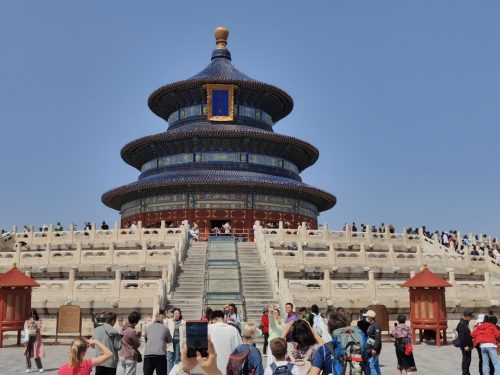
The Hall of Prayer for Good Harvests contains not a single idol, yet it is itself an “astronomical instrument.” The number of pillars within encodes the four seasons, the twelve months, the twelve double-hours, and the twenty-four solar terms. Here, the Emperor “prayed for the harvest.” For to control the calendar was to control the lifeblood of an agrarian empire, and to monopolize the right to pray for the harvest was to monopolize the right to speak with Heaven.
On the other side of the planet, Stonehenge in England aligns precisely with the summer solstice sunrise; the oculus in the dome of the Pantheon in Rome admits a shaft of heavenly light. Separated from the Hall of Prayer for Good Harvests by thousands of miles and thousands of years, they are nonetheless doing the very same thing: using architectural geometry to simulate cosmic order, and expressing humanity’s awe before the laws of the universe.
Stop 3: The Danbi Bridge — The Ritual Avenue from the Human World to the Divine Realm
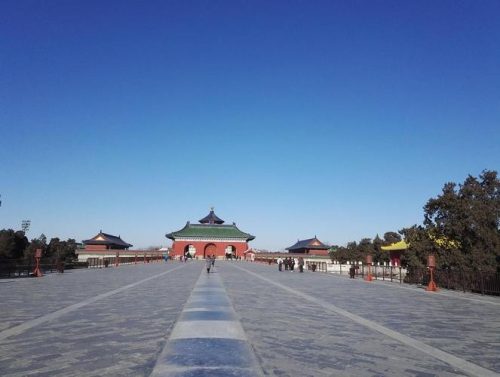
This 360-meter-long elevated causeway, raised several meters above the ground, was the Emperor’s “Spirit Way” connecting the two altars. Walking upon it, with ancient cypresses towering on either side and the blue-glazed roof of the Hall of Prayer for Good Harvests ahead, the entire spatial design tells you: you are leaving the human world behind, step by step, and approaching the realm of Heaven. This is the very essence of “Ritual” — using the choreography of space and ceremony to accomplish a transformation “from the mortal to the sacred.”
Ancient Rome had a comparable ritual roadway — the Via Sacra — running from the Forum up to the Capitoline Hill, its arches, temples, and statues composing a spatial narrative “from worldly glory to sacred confirmation.” The Danbi Bridge achieves a similar effect, but instead of celebrating human achievement, it guides the walker step by step away from the human world and into the order of “Heaven” — a distinctive expression of the Chinese civilizational ethos of “governing humanity through Heaven.”
Stop 4: The Imperial Vault of Heaven and the Echo Wall — An Acoustic Design for the Resonance Between Heaven and Humanity
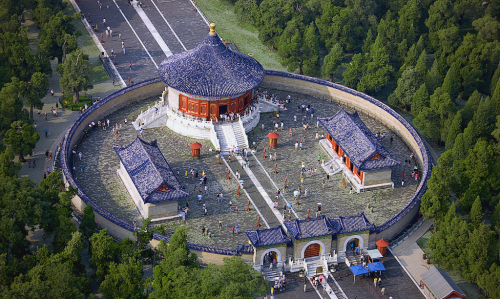
Clap your hands on the stone slab before the Imperial Vault of Heaven, and the sound will travel along the smooth brick wall, producing a long, resonant echo. The ancients interpreted this as “Heaven has heard the voice of the Emperor.” This was no superstition, but a carefully designed piece of architectural acoustics by ancient craftsmen — intended to let the Emperor, within the ritual of “Li,” tangibly feel the “Resonance Between Heaven and Mankind.”
This desire to seek supernatural endorsement also appeared at the Oracle of Delphi in Greece. The two share a similar function, yet their paths are utterly different: Delphi relied on an ecstatic priestess to convey the will of the gods, while the Temple of Heaven relied on precise, rational architectural design — a clear expression of the Chinese civilizational ethos of “replacing shamanism with reason.”
Stop 5: The Circular Mound Altar — The Legitimacy Engine of Imperial Power
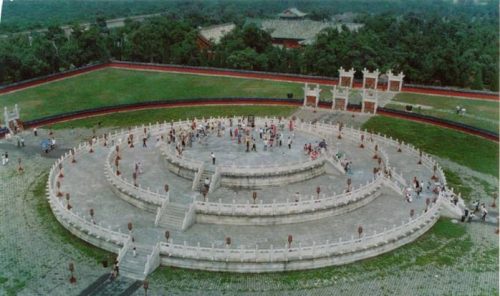
This is a three-tiered circular altar of white marble. On the day of the Winter Solstice, the Emperor stood alone at its center to offer sacrifice to “Heaven.” The stones of the altar surface and the balustrade panels are all arranged in multiples of nine (nine being the supreme yang number, symbolizing Heaven). This was the highest-level “State Sacrifice” of the empire, proclaiming to all under Heaven: the Emperor is the only person in the world qualified to sacrifice to Heaven, and his rule is “commissioned by Heaven’s mandate.”
In ancient Rome, the Capitoline Temple was the core of the “state religion.” Consuls taking office, generals returning in triumph — all were required to ascend the Capitoline Hill to offer sacrifice to Jupiter, the chief god. Like the Capitoline Hill, the Temple of Heaven established the legitimacy of the regime by monopolizing the right of sacrifice. But there is a fundamental difference: Roman legitimacy came from the endorsement of “the gods,” while the legitimacy of the Temple of Heaven came from “Heaven” — a formless, imageless, yet supremely sovereign cosmic order.
──────────────────────────────────────────────────
Tour Leader: Gao Yu — A Cultural Scholar Who “Reads History Through Objects”
For this deep tour, we have specially invited the cultural scholar and writer Gao Yu to lead the group.
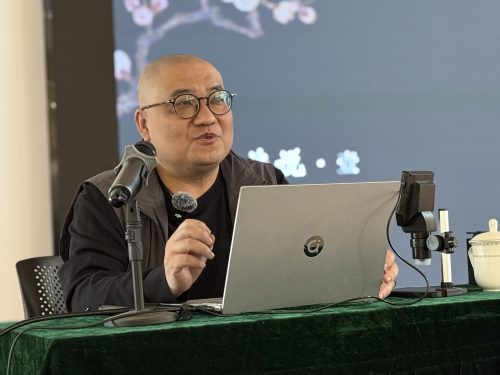
Gao Yu is no ordinary tour guide. He is a cultural scholar who excels at “reading history through objects.” Fascinated by historical texts for nearly thirty years, he has developed through long years of study a distinctive personal philosophy of history — “culture as the substance, history as the expression” — holding that “changes in cultural genes guide the direction of history.”
He has published two widely acclaimed works of cultural history:
- Contemplating History: Reading China Through Jade: Using jade artifacts as a thread, this book deconstructs the history of Chinese civilization — discussing history without telling anecdotes, discussing jade without discussing authentication.
- Reading China Through Porcelain: A Geopolitical Cultural History: Using porcelain as an entry point, this book analyzes China’s geopolitical dynamics and cultural transformations.
Why is Gao Yu the right person to interpret the Temple of Heaven? Because the Temple of Heaven is, in essence, a colossal “ritual vessel.” What Gao Yu does best is to decode the deep logic of Chinese civilization from the “materiality” of objects and architecture. Through jade, through porcelain, he has read out the political order, aesthetic ideals, and logic of power in ancient China. This time, he applies the same method to the bricks, wood, altars, and halls of the Temple of Heaven — so that “Ritual” ceases to be an abstract noun and becomes an ancient political system that can be clearly understood by Western audiences.
Gao Yu is also a recognized inheritor of Jiangsu Province’s intangible cultural heritage. This dual identity as scholar and craftsman gives him a lived, practice-grounded understanding of the ancient Chinese tradition of “the vessel that carries the Way” — endowing him with a truly distinctive perspective when interpreting the Temple of Heaven, this grand ritual vessel that “carries the Way through architecture.”
──────────────────────────────────────────────────
Tour Information
| Item | Details |
| Duration | 3 Hours |
| Language | Bilingual (Chinese & English) |
| Tour Leader | Gao Yu (Cultural Scholar / Historical Writer) |
| Core Theme | “Ritual” and the Mandate of Heaven: The Code of State Sacrifice at the Temple of Heaven |
| Target Audience | Foreign visitors interested in the deep logic of Chinese civilization; expatriates residing in China |
| Meeting Point | East Gate of the Temple of Heaven |
Booking & Inquiry
- Price: USD 120 per person
- Group Size: 4–12 persons per group (a boutique small group ensuring quality in-depth exchange)
- How to Book: Please send an email to michael_xgw@hotmail.com or add us on WhatsApp at 93museum
- Custom Sessions Available: Suitable for diplomatic missions, foreign enterprises, international schools, and other groups seeking tailored experiences
──────────────────────────────────────────────────
“At the Temple of Heaven, you will understand this: Chinese civilization, though it had no Pope, developed a system of Ritual more rigorous than any religion; though it did not worship a personal God, it possessed the most powerful sense of the sacred.”
──────────────────────────────────────────────────